
DBT Diary Card Examples: What Real Entries Look Like
A diary card is easier to understand in concept than in practice. You know you are supposed to track emotions, urges, and skills. But knowing that and knowing what to actually write when you sit down to fill it out are different things.
Seeing examples helps bridge that gap—not as templates to copy word for word, but as illustrations of the specificity and structure that make entries useful in therapy.
What a Single Entry Captures
Each diary card entry records a snapshot of an emotional experience:
- Emotion — Named specifically. "Frustrated" is more useful than "upset."
- Intensity — Rated 0–10. Gives your therapist a quick read on severity.
- Urge — Any urge toward a target behavior, plus its intensity.
- Trigger/Event — What prompted the emotion.
- Skill Used — The DBT skill you applied (or wish you had).
- Outcome — Whether you acted on the urge, and what happened next.
The power of a diary card is not in any single entry. It is in the patterns that emerge over weeks and months.
Example 1: Managing Anxiety with Grounding
| Field | Entry |
|---|---|
| Emotion | Anxious |
| Intensity | 8/10 |
| Urge | Avoid social event (6/10) |
| Trigger | Upcoming work presentation |
| Skill Used | 5-4-3-2-1 grounding, paced breathing |
| Outcome | Didn't avoid the event. Anxiety dropped to 5 after grounding. |
This entry shows the separation between urge and action. The urge to avoid was strong (6/10), but the person attended anyway. That distinction matters in therapy—it shows skill application under pressure.
Example 2: Interpersonal Conflict
| Field | Entry |
|---|---|
| Emotion | Frustrated, hurt |
| Intensity | 7/10 |
| Urge | Snap at partner (8/10) |
| Trigger | Partner cancelled plans last minute |
| Skill Used | DEAR MAN to express disappointment |
| Outcome | Talked about it without yelling. Still disappointed but did not escalate. |
Notice the outcome is honest—"still disappointed" is not a failure. The skill prevented escalation, which is the goal.
Example 3: Distress Tolerance in Crisis
| Field | Entry |
|---|---|
| Emotion | Overwhelmed, panicked |
| Intensity | 10/10 |
| Urge | Self-harm (7/10) |
| Trigger | Received unexpected bad news |
| Skill Used | TIPP — ice on face, paced breathing |
| Outcome | Got through the urge without acting. Intensity dropped to 6. |
High-intensity entries like this are some of the most valuable data points. They show your therapist exactly which crisis skills are working.
Log entries like these in seconds — try DBT Pal
Download DBT PalExample 4: Emotion Regulation with Opposite Action
| Field | Entry |
|---|---|
| Emotion | Sadness, hopelessness |
| Intensity | 6/10 |
| Urge | Isolate, stay in bed (7/10) |
| Trigger | Feeling rejected after job interview |
| Skill Used | Opposite action — went for a walk, texted a friend |
| Outcome | Still felt sad but less isolated. Intensity dropped to 4. |
Opposite action works by changing the behavioral response to an emotion. The diary card captures both the emotion and the counter-move.
Example 5: Checking the Facts
| Field | Entry |
|---|---|
| Emotion | Anger |
| Intensity | 9/10 |
| Urge | Yell, slam door (8/10) |
| Trigger | Perceived criticism from family member |
| Skill Used | Check the facts — was it actually criticism? |
| Outcome | Realized I was interpreting a neutral comment as criticism. Intensity dropped. |
This example demonstrates cognitive reappraisal. The skill changed the interpretation of the event, which shifted the emotional response.
Example 6: Tracking Positive Emotions
| Field | Entry |
|---|---|
| Emotion | Content, calm |
| Intensity | 5/10 |
| Urge | None |
| Trigger | Quiet morning routine |
| Skill Used | Mindful observation — noticed positive emotion |
| Outcome | N/A (tracking positive experiences) |
Not every entry involves crisis. Tracking moments of calm and contentment reveals what is working—which environments, routines, and skills support your wellbeing.
Example 7: Radical Acceptance
| Field | Entry |
|---|---|
| Emotion | Grief, resignation |
| Intensity | 8/10 |
| Urge | Ruminate on "should haves" (6/10) |
| Trigger | Thinking about ended relationship |
| Skill Used | Radical acceptance — acknowledging what is |
| Outcome | Pain still present but less fighting against reality. |
Radical acceptance does not eliminate pain. It reduces the suffering that comes from resisting what has already happened. The diary card tracks that shift.
Example 8: Using PLEASE Skills Preventively
| Field | Entry |
|---|---|
| Emotion | Irritable |
| Intensity | 4/10 |
| Urge | Skip workout, eat junk food (3/10) |
| Trigger | Poor sleep the night before |
| Skill Used | PLEASE — ate a balanced meal, took a 20-min walk |
| Outcome | Irritability stayed manageable. Avoided a spiral. |
PLEASE skills target vulnerability factors. This entry shows preventive skill use—addressing the root cause (poor sleep, nutrition) before emotions escalate.
Build your tracking habit with DBT Pal
Download DBT PalPatterns to Watch For
Over time, your diary card entries reveal data that isolated moments cannot:
- Recurring emotions: Which feelings show up most frequently? Is anxiety your baseline, or does it spike around specific triggers?
- Trigger clusters: Are most of your high-intensity entries connected to work, relationships, health, or a specific time of day?
- Skill effectiveness: Which skills consistently lower your intensity? Which ones do you reach for but rarely help?
- Urge trends: Are urges decreasing in frequency or intensity over weeks? That is measurable progress.
- Time-of-day patterns: Do distress peaks happen in the morning, evening, or after specific recurring events?
These patterns become the agenda for therapy sessions. Instead of guessing at what happened during the week, you walk in with data.
Tips for Better Entries
Be specific with emotion words. "Frustrated" is more useful than "upset." The more precise your label, the more your therapist can help you target specific skills.
Track urges separately from actions. Having an urge and acting on it are different events. The diary card captures both, which lets you and your therapist celebrate urge resistance—even when the emotion itself was intense.
Log skills that only partially worked. A skill that brought intensity from 9 to 7 is still useful data. Do not wait for a "perfect" skill application to record it.
Enter sooner rather than later. Entries logged within an hour of the event are significantly more accurate than reconstructions at the end of the week.
Track positive moments too. Patterns of what is working matter as much as patterns of struggle.
How DBT Pal Makes Tracking Faster
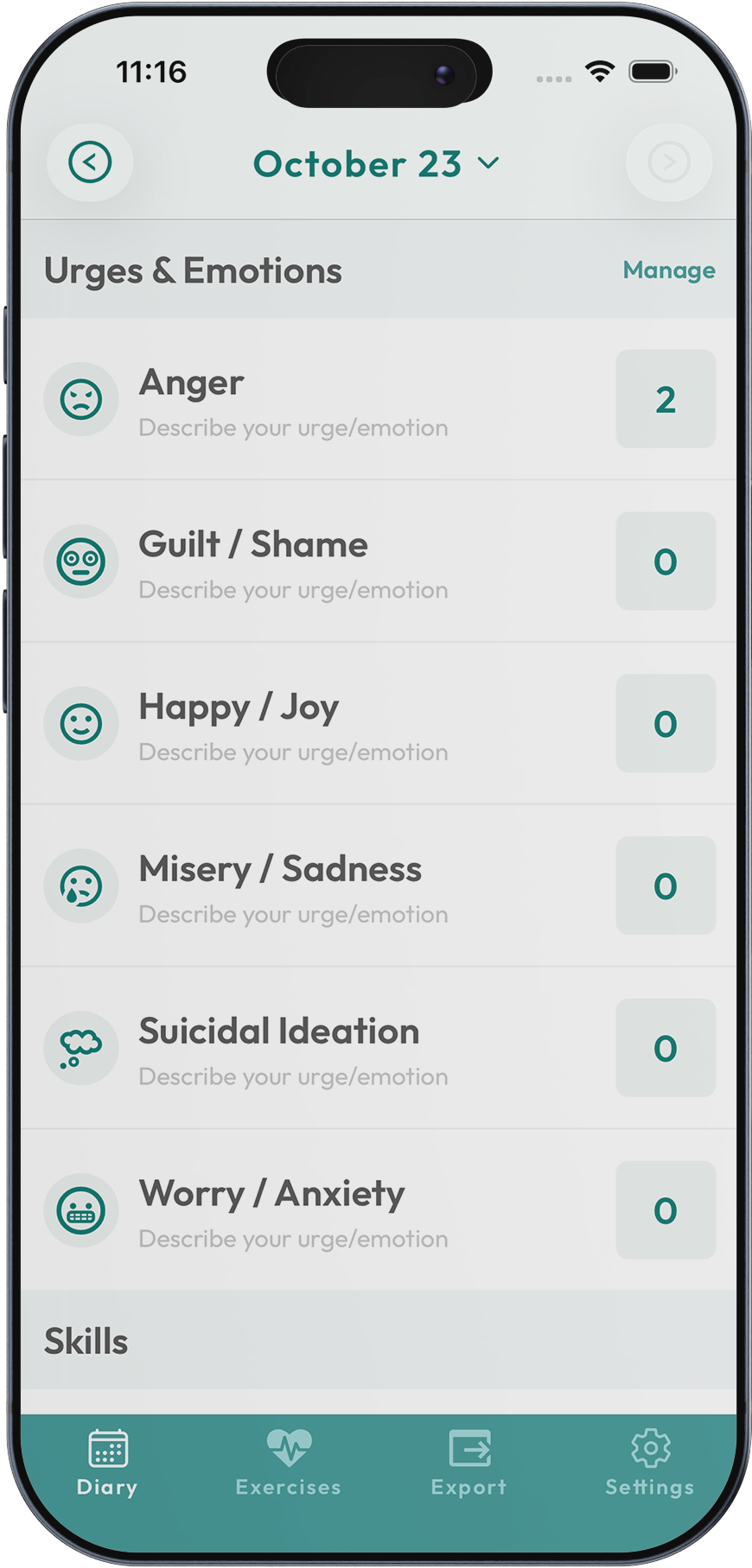
DBT Pal structures diary card entries so they mirror the examples above—emotions, intensity sliders, urge tracking, skill selection, and free-text notes—all on one screen.
- Quick entry after a difficult moment before details fade
- Structured format your therapist can read without interpretation
- Pattern reports that surface trends automatically
- Weekly exports as PDF or CSV for session prep
Download DBT Pal — free diary card tracking
Download DBT Pal