
The diary card is one of the most practical tools in Dialectical Behavior Therapy. It gives you a structured way to record what you felt, what triggered it, which skills you used, and whether those skills helped—all in a format your therapist can review with you each week.
The concept is simple. The execution is where most people struggle.
You understand the value of tracking. But between work, relationships, and the moments when emotions spike without warning, the card stays blank until the night before your next appointment. You fill it out from memory, guess at intensity levels, and wonder which skills you actually used versus which ones you just thought about using.
That pattern is common, expected, and fixable. The right template—paired with a workflow that meets you where you are—makes daily tracking something you can actually sustain.
Start with a free diary card template — download DBT Pal
Download DBT PalWhat a Diary Card Template Tracks
A standard DBT diary card captures five categories of information. Each one serves a specific purpose in therapy:
Emotions and intensity ratings — Name what you felt using specific language. “Frustrated at 7/10” is more useful than “felt bad.” Specificity helps you and your therapist spot recurring emotional patterns.
Urges and target behaviors — Record urges toward behaviors you are working to change (self-harm, substance use, isolation, impulsive spending). Note the intensity and whether you acted on them. This data separates the urge from the action, which is a core DBT distinction.
Skills practiced — Which DBT skills did you use? Mindfulness, distress tolerance, emotion regulation, interpersonal effectiveness—track what you tried, even when it did not work perfectly. Partial success is still data.
Triggers and events — What happened before the emotion spiked? A conversation, a thought, a physical sensation, a memory. Identifying triggers helps you prepare for similar situations.
Reflections and notes — Free-text space for anything that does not fit the other categories. “Next time I would try opposite action instead” is exactly the kind of insight that makes your next session productive.
A Simple Template Structure
If you are starting from scratch or want to see the basic layout, here is what a minimal diary card looks like:
| Date | Emotions (0–10) | Urges (0–10) | Acted On? | Skills Used | Trigger | Notes |
|---|---|---|---|---|---|---|
| Mon | Anxious (7), Sad (5) | Isolate (6) | No | Paced breathing, opposite action | Work deadline | Went for a walk instead of staying in bed |
| Tue | Frustrated (8) | Snap at partner (7) | No | DEAR MAN, check the facts | Partner cancelled plans | Expressed disappointment calmly |
| Wed | Content (4) | None | — | Mindful observation | Quiet morning | Noticed and recorded a positive moment |
The specific columns matter less than consistency. Use whatever structure your therapist prefers, then stick with it long enough to see patterns.
Start tracking with DBT Pal — free diary card on iOS
Download DBT PalCommon Friction Points (and How to Fix Them)
Most people who struggle with diary cards are not struggling with the concept. The friction shows up in practical ways:
Forgetting to track during busy or emotional days. Set a daily reminder—either in DBT Pal or your phone calendar. Pairing the entry with an existing habit (brushing teeth, medication) also helps.
Filling out entries days later when details have faded. Even a 30-second entry logged in the moment beats a detailed reconstruction three days later. Lower the bar: emotion, intensity, and one skill is enough.
Feeling overwhelmed by the number of things to track. Customize your template. If you are not currently working on interpersonal skills, hide that section. Focus on the modules that match your treatment goals right now.
Losing paper cards or not having them at the right moment. Keep a digital backup. DBT Pal stays in your pocket and syncs the same data your therapist needs.
Skipping entries on difficult days, then feeling guilty about gaps. Gaps are normal. The guilt makes it harder to restart. A single entry after a gap is more valuable than a perfect streak.
Printable vs Digital: Use Both
| Format | Best For | Trade-offs |
|---|---|---|
| Printable (paper) | Therapy groups, offline days, building handwriting-based reflection habits | Easy to lose, hard to review trends, no automatic analysis |
| Digital (DBT Pal) | On-the-go tracking, fast urge logging, automatic pattern reports, therapy exports | Requires your phone, screen time during emotional moments |
Switching between formats is not a failure. Many people use paper in group therapy and digital tracking the rest of the week. The goal is to capture data in whatever format keeps you consistent.
How to Turn a Template into a Daily Workflow
A template sitting in a drawer does nothing. Here is how to make it part of your routine:
-
Download and duplicate the DBT Crisis Kit template plus any therapist-provided sheets. Have both printable and digital versions ready.
-
Customize your skill list so only the skills you actively use stay visible. Removing clutter reduces decision fatigue when you are already stressed.
-
Set two reminders — one for your evening review and one that fires after typical trigger times (e.g., after work, after a recurring appointment).
-
Log in the moment when possible. If you cannot complete a full entry, just capture the emotion and intensity. You can add skills and notes later.
-
Review weekly by exporting a PDF or CSV from DBT Pal to share with your therapist ahead of your session. Walking in with data changes the conversation.
How DBT Pal Helps
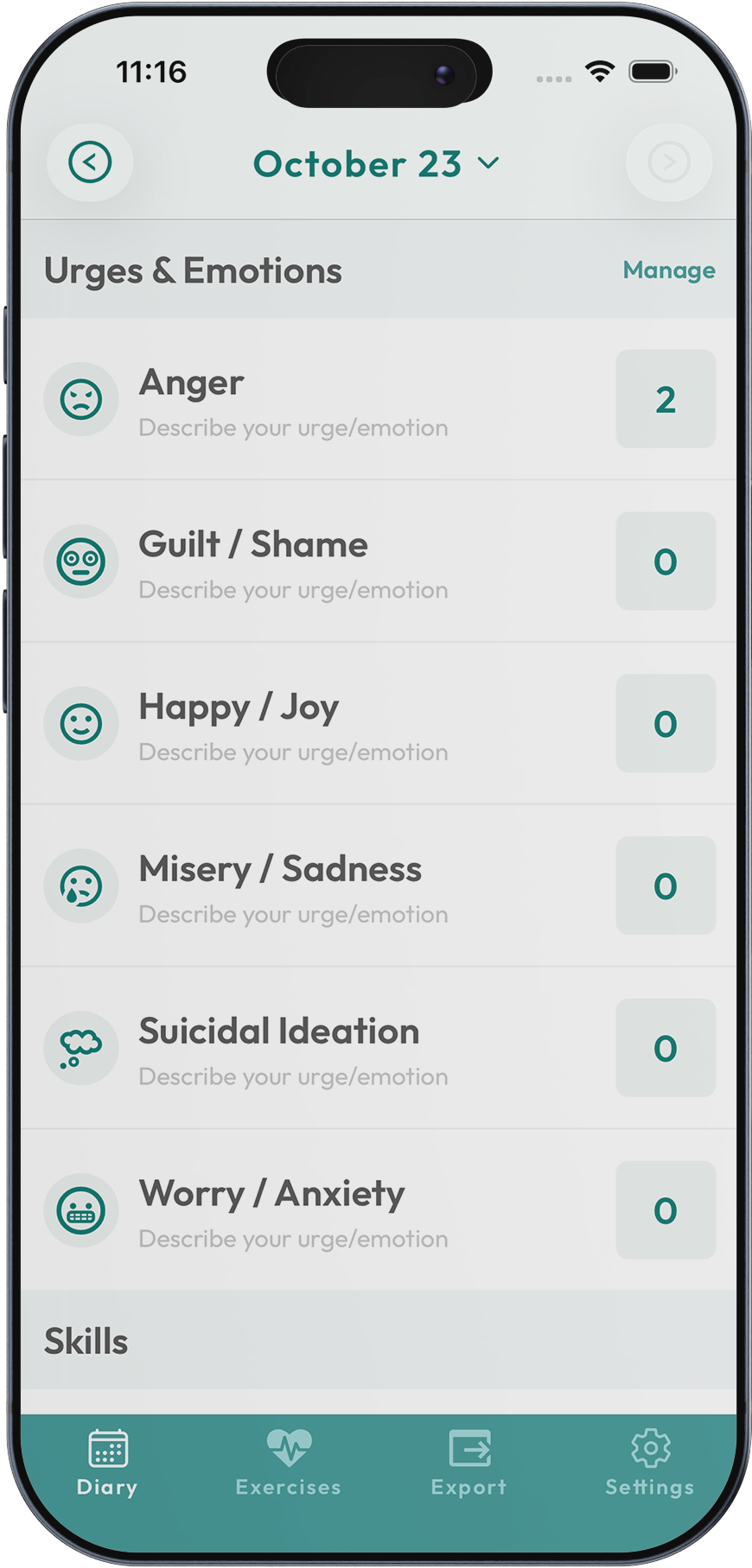
DBT Pal is built around the diary card workflow. Instead of remembering what you felt three days ago while filling out a paper card, you log emotions and skills in the moment—or whenever you have a few seconds.
- Fast entry: Tap emotions, drag intensity sliders, select skills. A complete entry takes under 60 seconds.
- Structured format: Emotions, urges, skills, and notes are organized the way your therapist expects to see them.
- Pattern tracking: The app surfaces trends over time—which emotions peak, which skills work best, which triggers keep recurring.
- Therapy-ready exports: Generate a weekly PDF or CSV to bring to session or email ahead of time.
- Privacy: All entries stay on your device unless you choose to export them.
Download DBT Pal and start your diary card today
Download DBT PalWhen a Template Helps Most
This kind of structured tracking tends to work best when DBT is already part of your daily life—when you are actively working with a therapist, practicing skills regularly, and looking for ways to make the tracking piece easier.
If you are early in DBT or exploring whether this approach fits you, start with just emotions and intensity. You can add complexity as the habit solidifies.